Last of the Jazz Joints: The Village Vanguard Through the Lens of Thomas Marcello
Exploring the history of New York’s legendary jazz club, Deborah Gordon’s new book and the photographer who captured Dexter Gordon and the musicians who made the Vanguard famous.
There are few jazz venues in the world with a history as rich as the Village Vanguard.
Tucked away in New York’s Greenwich Village, the small basement club has been at the heart of jazz for more than 90 years. From Sonny Rollins and John Coltrane to Bill Evans and Dexter Gordon, its stage has hosted some of the most influential musicians in the history of the music.
Now, a new book by Deborah Gordon, daughter of legendary tenor saxophonist Dexter Gordon, explores the story of the club.
Last of the Jazz Joints: An Incomplete History of the Village Vanguard brings together the people, performances and memories that have made the venue such an important part of jazz.
Among the photographs selected for the book are images by Thomas Marcello, one of the photographers whose work is available as high quality prints from Dalston 606.
Thomas photographed extensively at the Village Vanguard, including Dexter Gordon himself. When Deborah Gordon was putting the book together, she specifically approached Thomas for permission to use some of his photographs.
It’s a fitting connection. The book tells the story of the club, while Thomas’s photographs help show what that story looked like — the musicians, the performances and the atmosphere of a place that has become synonymous with jazz.

The history of the Village Vanguard
The Village Vanguard was opened by Max Gordon in 1935. Originally a venue for poetry, folk music and artistic performances, it gradually became one of the most important jazz clubs in the world.
Its distinctive triangular basement room has remained at the heart of the venue’s identity. Unlike larger concert halls, the Vanguard offers an intimate setting where musicians perform just a few feet from the audience.
That proximity is part of the magic.
As a punter, you can hear the faintest details of a saxophone solo, the conversation between musicians and the atmosphere of a room that has witnessed generations of jazz history.
For many jazz musicians, performing at the Vanguard was and still is a significant moment in their careers.
The recordings that made the Vanguard famous
The Village Vanguard has played a central role in some of jazz’s most important live recordings.
Sonny Rollins’ A Night at the Village Vanguard, recorded in 1957, remains one of the defining live jazz albums. John Coltrane also recorded at the club, producing performances that would become essential listening for generations of jazz fans.
Bill Evans’ Sunday at the Village Vanguard is another landmark recording, capturing the intimacy and musical interaction that made the venue so distinctive.
The Vanguard is not simply a place where jazz has been played. It is a place where jazz history has been recorded.

Dexter Gordon and the Village Vanguard
For fans of Dexter Gordon, the Village Vanguard has a particular significance.
Born in Los Angeles in 1923, Gordon became one of the defining tenor saxophonists of the bebop and hard bop eras. His playing was unmistakable: a full, expressive tone, a relaxed sense of rhythm and an ability to tell a story through his instrument.
After spending many years living and performing in Europe, Gordon returned to the United States in the 1970s.
One of the highlights of this period was his celebrated recording Homecoming: Live at the Village Vanguard, recorded in December 1976.
The album features Gordon alongside Woody Shaw, Ronnie Mathews, Stafford James and Louis Hayes. It captures a remarkable moment in his career, with Gordon returning to the American jazz scene after years abroad.
For listeners, the album is a reminder of Gordon’s extraordinary presence as a live performer.
For photographers, he was equally compelling.
His distinctive style, imposing stage presence and expressive playing made him a natural subject for anyone looking to capture the character of jazz.
Among those photographers was Thomas Marcello.
Thomas Marcello: Photographing Dexter Gordon at the Village Vanguard
Thomas Marcello was a regular presence around the jazz scene, photographing musicians in performance and behind the scenes.
He took numerous photographs at the Village Vanguard, building an archive of images that documents the character of the club and the musicians who played there.
Among those musicians was Dexter Gordon.
Thomas’s photographs capture more than a musician at work. They offer a glimpse of Dexter Gordon in his element, immersed in the atmosphere of a venue that helped define his career.
They provide a visual connection to the recordings and performances that have become part of jazz history.
A new look at a legendary jazz venue
Last of the Jazz Joints: An Incomplete History of the Village Vanguard offers an opportunity to explore one of the most important venues in jazz.
The book brings together the club’s history, its musicians and the people who helped shape its identity.
It is a story that stretches from the early days of Max Gordon’s venue to the jazz performances that made the Vanguard famous.
For fans of Dexter Gordon, the book also offers a connection to his legacy through the photographs selected from Thomas Marcello’s archive.
The result is a reminder that jazz history is not only about the music itself. It is also about the places where it happened, the people who were there and the photographs that captured those moments.
Jazz photography for your walls
At Dalston 606, we’re interested in the visual history of jazz as much as the music itself.
Our collection includes photographs from musicians and photographers whose work captures the character of the era.
Thomas Marcello’s photographs are an important part of that collection.
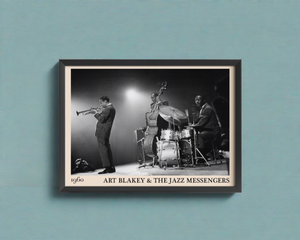
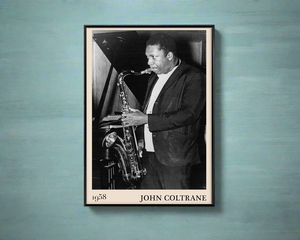
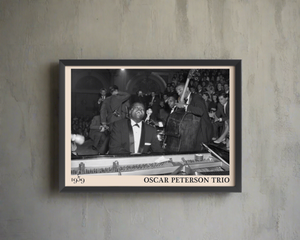
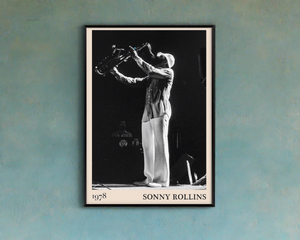
His images of jazz musicians, including Dexter Gordon, Charle Mingus, Dizzy Gillespie and Oscar Peterson, capture the energy of live performance, the personalities behind the instruments and the atmosphere of the clubs where so much of jazz history unfolded.
We’re pleased to be able to offer a selection of his photographs as art prints.
For fans of Dexter Gordon, the Village Vanguard and classic jazz photography, these images offer a way to connect with the music beyond the record collection.
Whether displayed in a home, music room or studio, a great jazz photograph can become more than decoration. It can be a reminder of the musicians, places and performances that continue to influence us.

Discover the book and the collection
For anyone interested in the history of jazz, Last of the Jazz Joints offers a fascinating look at one of the music’s most important venues.
Written by Deborah Gordon, daughter of Dexter Gordon, the book brings together the story of the Village Vanguard, its musicians and the people who helped make it what it is today.
And for those who want to bring a little of that history into their own space, Thomas Marcello’s photography offers a direct connection to the musicians and performances that made the club legendary.
At Dalston 606, we’re proud to be offering photographs from Thomas’s archive, including images of Dexter Gordon and the wider jazz scene.
Explore the book: Last of the Jazz Joints: An Incomplete History of the Village Vanguard
Discover Thomas Marcello’s photography: Dalston 606
DALSTON 606
Enjoyed this? Take ten on us.
Get 10% off your first order of original music photography prints. New drops and stories behind the shots, straight to your inbox.